DOP vs ROPP: How to Choose the Right Closure for Your Olive Oil Bottle
Compare DOP and ROPP closure systems for bottle compatibility, pouring, sealing and filling equipment, with a checklist for testing samples.
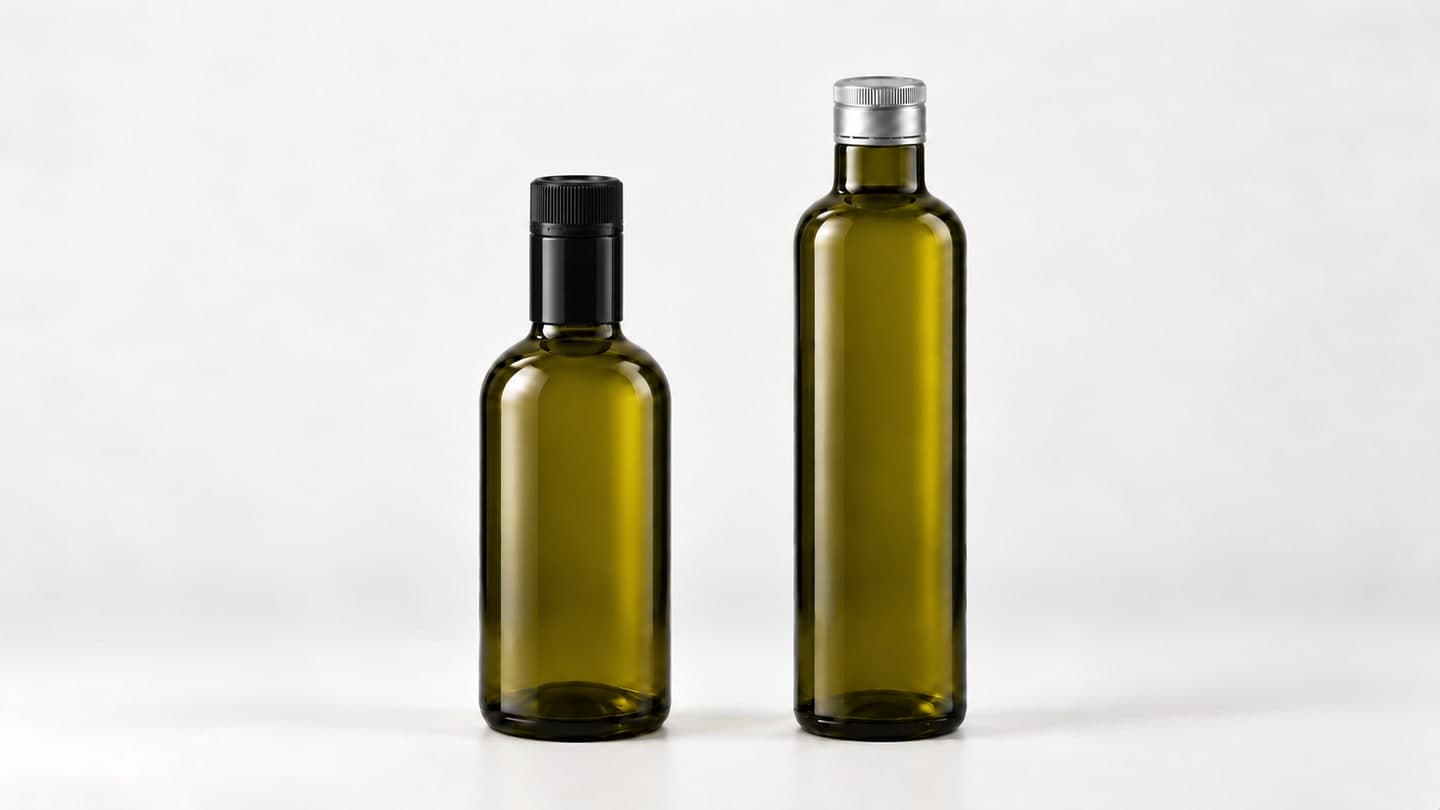
A bottle gives your olive oil its shelf presence. The closure determines how customers open it, pour from it and seal it again. Choosing those components together also helps avoid costly surprises on the filling line.
If you have already compared models in our olive oil bottle guide, the next step is to match the bottle finish with a suitable closure. DOP and ROPP are two designations you will encounter in the Feniks catalogue. Understanding them is a useful starting point, but the final choice depends on the specific bottle, cap and application equipment.
What do DOP and ROPP mean?
DOP: a bottle finish used for olive oil closures
The finish is the part of a bottle's neck that interfaces with the closure. In our catalogue, DOP identifies a finish used with compatible olive oil closure systems, including options with pouring inserts and tamper-evident features. The exact cap construction and method of application depend on the closure selected.
For example, Biolio DOP is a bottle model with a DOP finish. Its name helps narrow the closure search; it does not mean that every cap described as DOP will fit it. Check the bottle drawing and the closure supplier's compatibility specification together.
The DOP finish designation here concerns packaging. It does not certify the olive oil's protected designation of origin.
ROPP: roll-on pilfer-proof
ROPP stands for roll-on pilfer-proof. In a conventional ROPP system, a metal cap shell is placed on the bottle and a capping head forms the threads around the threaded glass finish. The closure's lower band is formed beneath the retaining feature on the neck to provide evidence of first opening.
Olea, for example, is listed with a ROPP 31.5 finish. The size designation alone is not a complete compatibility specification: the neck geometry, cap dimensions, liner and capping head must also work together.
A standard screw-capping machine is not automatically suitable for applying conventional ROPP caps. Confirm the required equipment before ordering.
Compare the complete closure system
| Decision | DOP finish with a compatible closure | Conventional ROPP system |
|---|---|---|
| Bottle compatibility | Match the exact DOP neck drawing to the selected cap. | Match the threaded finish, cap shell and retaining feature. |
| Application equipment | Confirm the application method for the specific closure. | Use a suitable roll-on head and settings for the bottle and cap. |
| Pouring control | Available pouring inserts depend on the closure design. | A compatible pouring insert may be specified separately. |
| First-opening evidence | Check the selected closure's band or other security feature. | Check that the formed band separates correctly on first opening. |
| Sealing performance | Validate the complete bottle, insert and closure combination. | Validate the liner, roll-on settings and bottle sealing surface. |
Neither designation alone guarantees a leak-free package, a particular shelf life or better pouring. Those results depend on the assembled package and how it is filled, closed, stored and used.
Pouring, sealing and tamper evidence
For a retail olive oil bottle, the opening experience matters as much as the cap's appearance. A pouring insert can help control the flow, but its opening and venting need to suit the oil and the bottle. Test a steady pour, the stop at the end of pouring and repeated use to see whether oil collects around the neck or runs down the bottle.
Sealing is a separate question. The sealing surface, liner or insert, and application settings all influence performance. A cap that feels tight by hand has not necessarily passed a leak test. Check both the original seal and the customer's ability to reseal the bottle after opening.
Tamper evidence indicates that a package has been opened. A non-refillable insert is a different feature. If your sales channel needs one or both, specify them explicitly and confirm the relevant requirements for your target market.
Check the filling line before choosing the cap
Share the bottle and closure drawings with your filling partner or machinery supplier. Confirm the capping head, tooling, operating settings and any separate insert-fitting step. A change of cap may require new tooling or a different machine, even if the bottles look similar.
Compare total packaging cost: bottle, closure, insert, tooling, setup time and rejects during production. The lowest cap price may not produce the lowest cost per successfully filled bottle.
A sample checklist before ordering
Use samples of the intended bottle, closure and olive oil, preferably on the equipment that will run production.
- Confirm the specification. Check the finish drawing, cap reference, liner or insert and food-contact documentation for the intended use.
- Run a capping trial. Look for consistent application, cap damage and interference with the bottle neck.
- Check the seal. Agree a leak-test method and suitable storage and transport conditions with your supplier.
- Test opening and resealing. Check first-opening effort, tamper-band behaviour and repeated closure by hand.
- Pour from a full and a partly empty bottle. Assess flow control, dripping and residue around the neck.
- Record the approved combination. Keep the bottle and cap references, drawings and machine settings together before placing the bulk order.
Choose a bottle and closure together
Biolio DOP and Olea ROPP 31.5 offer different starting points. The right combination is the one that fits your filling process, protects the product and gives customers the opening and pouring experience you want.
Explore our olive oil bottles, then contact the Feniks team with your preferred bottle, filling setup and pouring requirements. We can help you confirm a compatible bottle and closure combination and arrange the next steps for samples and a quote.