How to Choose a Wine Bottle: Shape, Glass Colour, Closure and Weight
Compare wine bottles by shape, glass colour, closure and weight, with Feniks catalogue examples and a checklist before ordering samples.
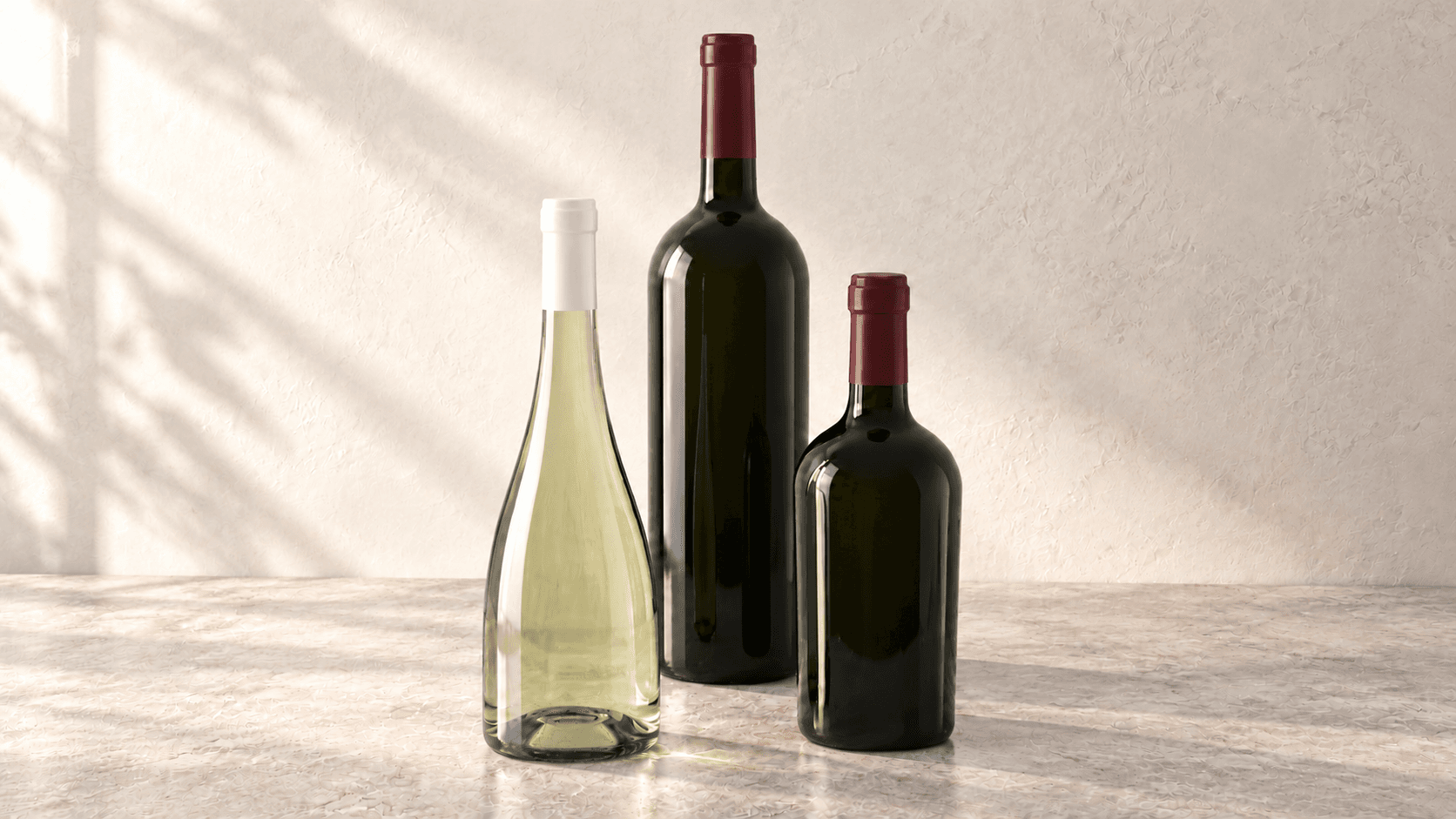
A wine bottle introduces your product before the first glass is poured. Its shape, colour and decoration establish expectations, while its neck finish and closure help protect the wine throughout storage and distribution.
For producers, choosing a bottle also means considering filling equipment, label dimensions, transport weight and the intended sales channel. Feniks's Italian bottle range offers different starting points, from classic Bordeaux silhouettes to rounded Burgundy forms and slender Renana models.
The best choice brings these requirements together.
Start with the bottle shape
Bordeaux: defined shoulders and a familiar silhouette
Bordeaux, or Bordolese, bottles have pronounced shoulders and a relatively straight body. They provide a familiar starting point for producers seeking a classic wine presentation.
Models such as BRD Storica allow brands to explore this silhouette across different capacities. When comparing models, check the usable label panel, overall diameter and carton arrangement alongside the appearance.
Burgundy: softer shoulders and flowing lines
Burgundy, or Borgognotta, bottles have sloping shoulders that flow into the body. Their rounded silhouette creates a different shelf presence from the more defined Bordeaux form.
BRG Armonia Leggera is one example in the Feniks catalogue. Check label dimensions on a physical sample: a label approaching the curved shoulder may behave differently from one applied entirely within the straight section.
Renana: a tall, slender presentation
Renana bottles offer a taller silhouette with a long neck. Renana Prestige, for example, is listed at 353.2 mm in its 750 ml format.
That height can create a distinctive presentation, but it also affects shelf clearance, carton dimensions and equipment settings. Equal bottle capacities do not necessarily fit the same packaging.
Choose glass colour for the actual sales environment
Clear glass displays the colour of white and rosé wines. However, its visual appeal should be considered alongside the product's exposure to light.
An Italian study published in PNAS examined white wines under supermarket-shelf conditions and found substantial losses in important aroma compounds in clear bottles. Coloured glass provided greater protection under the conditions tested. These findings highlight a packaging consideration rather than establishing one shelf-life limit for every wine. Read the research.
Green and darker glass can reduce exposure to relevant wavelengths, but protection depends on the glass composition, thickness and colour. Storage conditions and the intensity and duration of lighting also matter.
Consider where the bottle will spend its time: inside a closed carton, on an illuminated retail shelf or in a restaurant display. Glass colour should support that journey.
Select the bottle and closure together
The bottle's neck finish determines which closure systems can be used. A familiar model name or similar-looking opening is insufficient to establish compatibility.
Natural cork, technical cork and synthetic stoppers seal against the internal neck surface. Their dimensions and application requirements must match the bottle. A longer cork is not automatically better: the neck can widen further down, affecting how the stopper seals. AWRI cylindrical-closure guidance.
Wine screw caps require a matching finish and appropriate application equipment. Their sealing liner also influences oxygen transmission, so similar-looking caps can perform differently.
Closure selection should reflect the wine style, intended storage period and bottling process. Cork and screw cap should not be treated as a simple distinction between premium and everyday wine. AWRI screw-cap guidance.
Before ordering, confirm the exact bottle variant, closure reference and technical drawings with the bottler.
Compare dimensions and weight
The following Feniks examples all have a nominal capacity of 750 ml, yet their specifications differ.
| Model | Weight | Height | Listed neck finish |
|---|---|---|---|
| BRD Storica | 600 g | 300 mm | CORK FP |
BRD Storica Leggera | 500 g | 300 mm | CORK FA |
BRG Armonia Leggera | 500 g | 301.3 mm | CORK FA |
| Renana Prestige | 500 g | 353.2 mm | CORK FP |
Confirm current specifications and availability before ordering. The finish labels above should be checked against the relevant drawings rather than treated as interchangeable.
Weight affects handling and shipment mass. A reduction of 100 g across 10,000 bottles removes one tonne of glass weight, although the effect on transport cost depends on the shipment.
A premium presentation can also come from balanced proportions, decoration and well-executed labels. Bottle weight alone does not establish the quality of the wine.
Plan the label and outer packaging early
A bottle should be evaluated with its label, closure, capsule and carton.
Check the straight-sided label area, surface curvature and space between the label and shoulder. Apply a printed sample to the actual bottle and assess alignment, adhesion and appearance.
Then test the complete bottle in the proposed carton or divider system. Height, diameter and closure dimensions influence how the package fits. A change of bottle can require changes beyond the glass itself.
For sparkling wine, select a bottle and closure system specifically approved for the intended pressure and production process. Appearance or weight alone cannot establish suitability.
Check samples before placing the bulk order
Use the intended bottle, closure and production equipment wherever possible.
- Verify the specification: capacity, dimensions, glass colour and exact neck finish.
- Confirm closure compatibility: review drawings and application requirements with the supplier and bottler.
- Run a filling trial: check handling, fill level, closure application and sealing.
- Approve decoration: test the final label, capsule or direct printing on the bottle.
- Review packing: confirm carton fit, pallet arrangement and transport requirements.
Find the right bottle for your wine
Bordeaux, Burgundy and Renana families offer different ways to express a brand. The right model should also suit the wine, closure, filling process and distribution conditions.
Explore the Feniks wine-bottle range, or contact our team with your preferred shape, capacity, closure and quantity. We can help identify suitable options and arrange the next steps for samples and a quote.